

Infectious Diseases
Common infections, antibiotic stewardship, tropical diseases and infection control.
Last reviewed
Use this quick reference guide to study and ensure you have mastered these common cases from the curriculum. You can generate specific cases on our SCA cases page or even practice them with our specialised and UK guidelines trained AI Actors.
Table of Contents
1Sepsis: Recognition and Emergency Management
Sepsis is a life-threatening organ dysfunction caused by a dysregulated host response to infection. NICE NG51 emphasises rapid identification and immediate action. Think sepsis in any unwell patient with suspected or confirmed infection.
Visual explanation
Suspected sepsis: community escalation
Age 16 or over, not pregnant or recently pregnant: use the current NICE community risk criteria alongside clinical judgement.
Any high-risk criterion
Arrange immediate emergency transfer, usually by 999 ambulance, and pre-alert the receiving service.
↳ Do not delay transfer for routine tests.
Moderate- to high-risk criteria
Establish whether there is a definite diagnosis and whether care is safe outside hospital. If either is uncertain, refer urgently for emergency care.
No criteria, but infection suspected
Assess the whole person and trajectory. Give specific deterioration advice and a clear route back to care.
Remember: This is a route map, not a complete assessment score. Use the linked NICE criteria and full observations; a normal temperature or reassuring single observation cannot exclude sepsis. Use separate pathways for children and maternity.
Simplified teaching diagram. Sources: NICE NG253: managing suspected sepsis
Red Flag Criteria (High Risk) - Immediate Action
Any one of these in a patient with suspected infection = high risk sepsis:
- •Objective evidence of new altered mental state (AVPU = V, P, or U)
- •Systolic BP ≤90 mmHg (or drop >40 from normal)
- •Heart rate >130 bpm
- •Respiratory rate ≥25 breaths/min
- •Needs oxygen to maintain SpO2 ≥92% (or new need for 40%+ FiO2)
- •Non-blanching rash, mottled, ashen, or cyanotic skin
- •Not passed urine in last 18 hours (or <0.5ml/kg/hr)
- •Lactate ≥2 mmol/L
- •Recent chemotherapy
Amber Flag Criteria (Moderate-High Risk)
Presence of suspected infection plus any of:
- • Relatives concerned about behaviour change
- • Acute deterioration in functional ability
- • Immunosuppressed
- • Trauma, surgery, or procedure in last 8 weeks
- • Respiratory rate 21-24
- • Systolic BP 91-100 mmHg
- • Heart rate 91-130 (or new arrhythmia)
- • Temperature <36°C
- • Not passed urine in last 12-18 hours
- • Clinical signs of wound, joint, or device infection
Primary Care Action for High Risk Sepsis
- Call 999 immediately - arrange emergency transfer to hospital
- Give IV/IM antibiotics - if available, do not delay transfer. Benzylpenicillin 1.2g IV/IM for suspected meningococcal disease
- Give IV fluids - if available (500ml 0.9% NaCl stat)
- Measure lactate - if point-of-care testing available
- Communicate urgently with receiving hospital (SBAR handover)
NEWS2 Score in Primary Care
While NEWS2 is primarily a hospital tool, many GP practices now use it for acutely unwell patients. A score of 5 or more (or 3 in a single parameter) should prompt urgent clinical review and consideration of sepsis. Document all observations clearly, including the time.
2Antibiotic Stewardship: Principles and Practice
Antimicrobial resistance (AMR) is a global health emergency. NICE NG15 and the TARGET toolkit provide key principles for responsible prescribing. Around 80% of antibiotics are prescribed in primary care - GPs have a central role in stewardship.
Key Prescribing Principles
- Do not prescribe antibiotics for self-limiting infections - most URTIs, coughs, and colds are viral
- Shared decision-making - discuss risks vs benefits of antibiotics, natural history, and self-care strategies
- Use narrow-spectrum first-line agents - avoid broad-spectrum antibiotics (e.g., co-amoxiclav, quinolones) unless specifically indicated
- Shortest effective course - evidence supports shorter courses for many infections (e.g., 3 days for uncomplicated UTI in women, 5 days for community-acquired pneumonia)
- Follow local antibiograms - check local resistance patterns and formulary guidance
Delayed (Back-Up) Prescriptions
An effective strategy that reduces antibiotic use by ~30%:
- • Give a prescription to collect after a set period (e.g., 2-3 days) if symptoms worsen or fail to improve
- • Post-date it or advise the patient not to fill it unless they meet agreed criteria
- • Explain that most infections improve without antibiotics
- • Particularly useful for: acute otitis media, acute sore throat, acute rhinosinusitis, acute cough/bronchitis
CRP Point-of-Care Testing
NICE recommends considering CRP POC testing for acute lower respiratory tract infections when diagnosis is uncertain:
- CRP <20 mg/L: Antibiotics not needed - self-care advice
- CRP 20-100 mg/L: Consider delayed prescription
- CRP >100 mg/L: Offer antibiotics
Antibiotic Allergy
Around 90% of patients labelled "penicillin allergic" are not truly allergic. NICE recommends reviewing and de-labelling where possible, as this label leads to use of broader-spectrum and less effective alternatives.
- •True allergy: Anaphylaxis, angioedema, urticaria within 1 hour of dose
- •Not allergy: Delayed non-urticarial rash (common with amoxicillin in viral illness), GI side effects, vague symptoms
3Upper Respiratory Tract Infections: Sore Throat, Otitis Media and Sinusitis
Most URTIs are self-limiting viral infections. The challenge is identifying the minority who benefit from antibiotics while avoiding unnecessary prescribing.
Acute Sore Throat - FeverPAIN Score
NICE recommends FeverPAIN to guide antibiotic prescribing (1 point each):
- Fever (during previous 24 hours)
- Purulence (pus on tonsils)
- Attend rapidly (within 3 days of onset)
- Inflamed tonsils (severely)
- No cough or coryza
Score 0-1: ~13-18% Strep. No antibiotic needed
Score 2-3: ~34-40% Strep. Consider delayed prescription (3 days)
Score 4-5: ~62-65% Strep. Consider immediate antibiotics or delayed prescription
Sore Throat Prescribing
- First-line: Phenoxymethylpenicillin (Penicillin V) 500mg QDS for 5-10 days
- Penicillin allergy: Clarithromycin 250-500mg BD for 5 days
- Duration of illness: Advise symptoms usually resolve within 1 week. Antibiotics only reduce duration by ~16 hours on average
- Avoid amoxicillin - can cause widespread rash if EBV (glandular fever) is the underlying cause
Acute Otitis Media
Most common in children aged 6 months - 3 years. Around 80% resolve without antibiotics within 3 days.
- No immediate antibiotics needed for most children and adults - offer analgesia and self-care
- Immediate antibiotics if: systemically unwell, symptoms lasting >4 days without improvement, otorrhoea, under 2 years with bilateral AOM, perforation
- First-line: Amoxicillin for 5-7 days
- Penicillin allergy: Clarithromycin or Erythromycin
Acute Rhinosinusitis
- No antibiotics for the first 10 days unless systemically very unwell
- Self-care: Paracetamol/ibuprofen, nasal saline irrigation, high-dose intranasal corticosteroid (e.g., Mometasone) for symptom relief
- Delayed prescription after 7 days or immediate antibiotics if symptoms worsen significantly or fail to improve after 10 days
- First-line: Phenoxymethylpenicillin. Alternative: Doxycycline or Co-amoxiclav
Red Flags - Urgent Referral
- •Quinsy (peritonsillar abscess): Unilateral tonsillar swelling, trismus, muffled voice, drooling, deviation of uvula. Refer same day
- •Epiglottitis: Stridor, drooling, inability to swallow. 999 emergency
- •Orbital/periorbital cellulitis: Complication of sinusitis. Eye swelling, proptosis, painful eye movements. Emergency referral
- •Mastoiditis: Post-auricular swelling, erythema, ear pushed forward. Complication of AOM. Emergency referral
4Acute Cough and Lower Respiratory Tract Infections
Acute cough in otherwise healthy adults is usually viral (acute bronchitis) and self-limiting. NICE NG120 provides clear guidance on when antibiotics are appropriate.
Acute Bronchitis
- No antibiotics - advise cough may last up to 3 weeks (average duration)
- Green/yellow sputum alone does not indicate bacterial infection - this is a common misconception to address
- Self-care: Honey and hot lemon, paracetamol/ibuprofen. No evidence for OTC cough medicines
- Consider CRP POC testing if pneumonia is not suspected but uncertain about need for antibiotics
When to Suspect Pneumonia
Consider pneumonia if the patient has cough plus at least one of:
- • Fever >38°C
- • Tachypnoea (>20 breaths/min)
- • Tachycardia (>100 bpm)
- • Focal chest signs (crackles, bronchial breathing, dullness to percussion)
In elderly/frail patients, pneumonia may present atypically with confusion, falls, or functional decline rather than classic respiratory symptoms.
Antibiotic Choices for Community-Acquired Pneumonia
- Low severity (CRB-65 = 0): Amoxicillin 500mg TDS for 5 days. Alternative: Doxycycline 200mg stat then 100mg OD, or Clarithromycin 500mg BD
- Moderate severity (CRB-65 = 1-2): Consider hospital assessment. Amoxicillin + Clarithromycin (dual therapy)
- High severity (CRB-65 ≥3): Urgent admission
Safety Netting for Acute Cough
- •Seek medical review if symptoms worsen rapidly or significantly
- •Return if cough lasts >3 weeks (consider pertussis, TB, or lung cancer in at-risk patients)
- •Coughing blood warrants urgent assessment
- •Feeling very unwell, high fever, or becoming confused - attend urgently
5Urinary Tract Infections: Assessment and Antibiotic Choice
UTIs are one of the most common reasons for antibiotic prescribing in primary care. NICE NG109 and NG113 provide clear frameworks for diagnosis and management.
Uncomplicated UTI in Women (Non-Pregnant)
- Diagnosis: Can be made clinically if 2 or more typical symptoms (dysuria, frequency, urgency) with no vaginal discharge. Dipstick may not be necessary
- First-line: Nitrofurantoin 100mg MR BD for 3 days (if eGFR ≥45)
- Second-line: Pivmecillinam 400mg stat then 200mg TDS for 3 days
- Third-line: Trimethoprim 200mg BD for 3 days (check local resistance - >30% E. coli resistance in many areas)
UTI in Men
All UTIs in men should be considered complicated. Always send an MSU for culture before starting treatment.
- First-line: Trimethoprim 200mg BD for 7 days or Nitrofurantoin 100mg MR BD for 7 days
- Consider underlying causes (prostatitis, urological abnormality) and refer if recurrent
UTI in Pregnancy
- Always send MSU - treat all bacteriuria in pregnancy (even asymptomatic) to prevent pyelonephritis
- First-line: Nitrofurantoin (avoid at term - risk of neonatal haemolysis) for 7 days
- Alternatives: Cefalexin or Amoxicillin (if sensitive)
- Avoid: Trimethoprim (folate antagonist - especially first trimester)
Recurrent UTIs in Women
Defined as ≥2 episodes in 6 months or ≥3 in 12 months.
- Non-antibiotic measures first: Adequate hydration, postcoital voiding, vaginal oestrogen (post-menopausal women - highly effective), D-mannose, cranberry products (limited evidence)
- Antibiotic prophylaxis (if non-antibiotic measures fail): Low-dose trimethoprim or nitrofurantoin at night for 3-6 months, then review
- Self-start antibiotics: Can be offered to selected patients with a clear symptom pattern
Pyelonephritis - When to Refer
Suspect pyelonephritis if UTI symptoms plus fever ≥38°C, loin pain, nausea/vomiting, or rigors.
- Can manage in community if: Mild symptoms, able to take oral fluids/antibiotics. Cefalexin 500mg BD-TDS for 7-10 days or Co-amoxiclav
- Refer to hospital if: Pregnant, unable to tolerate oral fluids, signs of sepsis, single kidney, immunosuppressed, or not improving after 24-48 hours
6COVID-19 and Post-COVID Syndrome (Long COVID)
While the acute pandemic phase has passed, COVID-19 remains relevant for GPs. NICE NG188 provides a framework for managing ongoing symptomatic COVID-19 (4-12 weeks) and post-COVID-19 syndrome (>12 weeks).
Acute COVID-19 Management in Primary Care
- Most cases are mild - self-care advice, rest, adequate fluids, paracetamol
- Antivirals (e.g., Paxlovid/nirmatrelvir-ritonavir) - consider for high-risk groups within 5 days of symptom onset (immunosuppressed, elderly, unvaccinated with risk factors). Check drug interactions (significant CYP3A4 interactions)
- Safety net: Attend A&E if worsening breathlessness, chest pain, confusion, inability to stay awake
Post-COVID Syndrome (Long COVID)
Signs and symptoms that continue or develop >12 weeks after acute infection, not attributable to alternative diagnoses.
Common symptoms:
- • Fatigue (most common)
- • Breathlessness
- • Cognitive impairment ("brain fog")
- • Palpitations and chest pain
- • Joint and muscle pain
- • Sleep disturbance, anxiety, depression
- • Postural tachycardia (consider POTS screen)
Primary Care Assessment
- Baseline investigations: FBC, U&Es, LFTs, CRP, TFTs, HbA1c, ferritin, BNP (if breathless/palpitations), chest X-ray (if respiratory symptoms), ECG
- Functional assessment: Document impact on daily activities and work
- Supported self-management: Pacing, graded activity (avoid boom and bust), sleep hygiene
- Refer to post-COVID clinic if symptoms significantly impact daily life, if not improving after 12 weeks, or if concerning features
Red Flags in Long COVID
- •New or worsening breathlessness at rest or with minimal exertion
- •Chest pain or palpitations with exertion - consider myocarditis (avoid strenuous exercise until cardiac assessment)
- •SpO2 <96% at rest or desaturation on exertion (1-minute sit-to-stand test)
- •New focal neurological symptoms
7Influenza: Diagnosis, Antivirals and At-Risk Groups
Influenza is a significant cause of morbidity and mortality, particularly in at-risk groups. NICE TA168 guides antiviral use. GPs play a key role in vaccination and early treatment of at-risk patients.
Clinical Features
Distinguish influenza from common cold:
Influenza:
- • Sudden onset
- • High fever (38-40°C)
- • Myalgia, headache
- • Dry cough
- • Prostration/fatigue
- • Often unable to work
Common Cold:
- • Gradual onset
- • Low-grade or no fever
- • Sneezing, nasal congestion
- • Sore throat, runny nose
- • Mild fatigue
- • Usually functional
Antiviral Treatment (NICE TA168)
Consider antivirals when influenza is circulating in the community (PHE surveillance) for at-risk patients within 48 hours of symptom onset:
- Oseltamivir (Tamiflu): 75mg BD for 5 days
- Zanamivir (Relenza): Inhaled, alternative if oseltamivir not suitable
Post-exposure prophylaxis may also be offered to unvaccinated at-risk contacts within 48 hours of exposure.
At-Risk Groups (Annual Flu Vaccination)
- • Aged 65 and over
- • Chronic respiratory disease (asthma, COPD)
- • Chronic heart, renal, liver, or neurological disease
- • Diabetes mellitus
- • Immunosuppression (disease or treatment)
- • Asplenia or splenic dysfunction
- • Morbid obesity (BMI ≥40)
- • Pregnant women
- • Carers and household contacts of immunocompromised
- • Healthcare workers
- • Children aged 2-3 (nasal spray vaccine)
Complications Requiring Hospital Assessment
- • Secondary bacterial pneumonia
- • Exacerbation of underlying chronic disease
- • Signs of sepsis or severe dehydration
- • Pregnant women with influenza symptoms (higher risk of complications)
8Herpes Zoster (Shingles): Diagnosis and Management
Reactivation of varicella-zoster virus (VZV) from dorsal root ganglia. Incidence increases with age and immunosuppression. Lifetime risk is approximately 1 in 3.
Visual explanation
Facial shingles: recognise the ophthalmic distribution
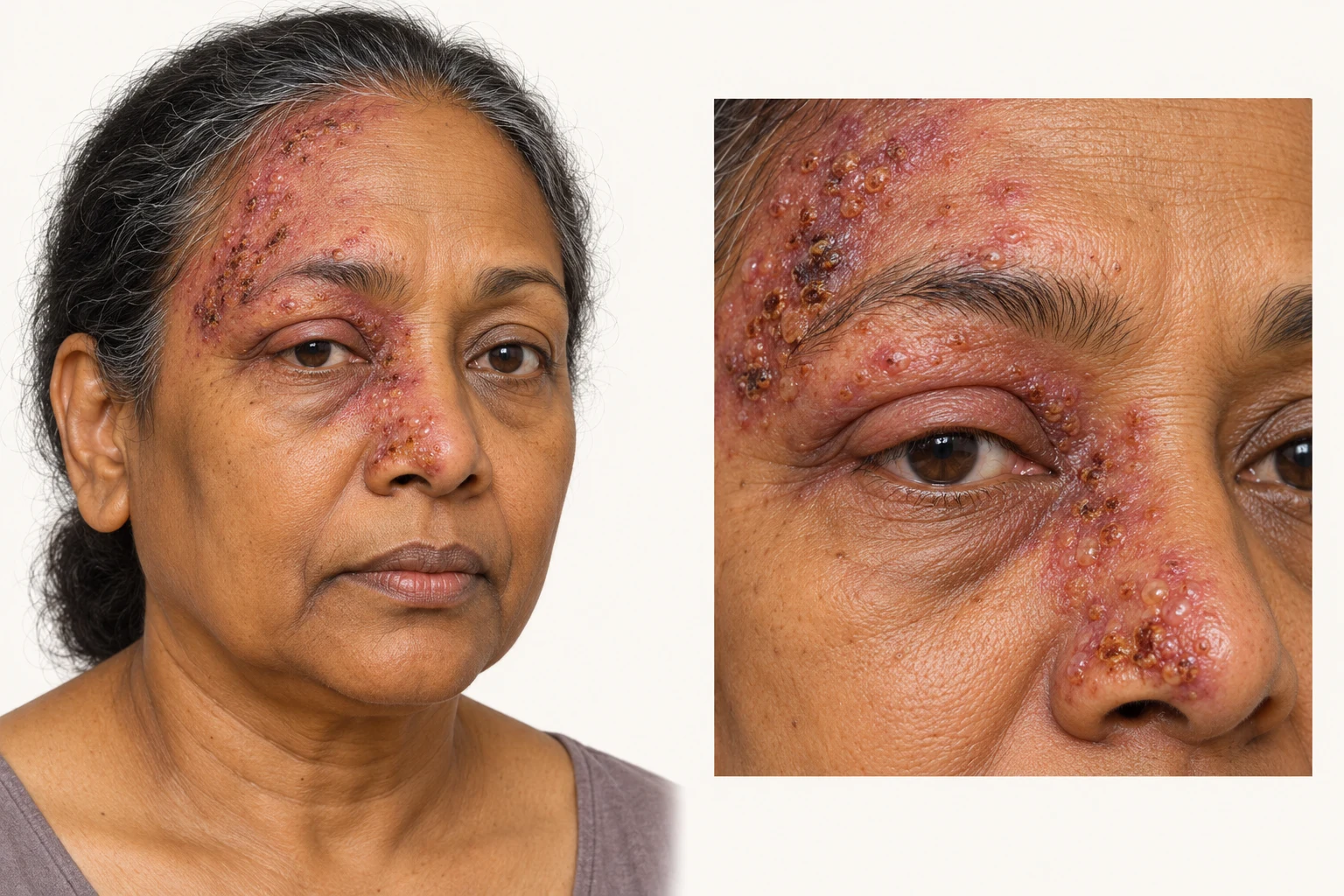
- Unilateral forehead / V1 distribution
- Upper eyelid involvement
- Nasal tip lesions (Hutchinson sign)
Distribution
Forehead and upper eyelid lesions follow the ophthalmic division of the trigeminal nerve. Look beyond the rash: check visual symptoms.
Nasal involvement
Nasal tip or side lesions increase concern for ocular involvement. Their absence does not exclude it.
Remember: Suspected ophthalmic zoster needs prompt systemic antivirals and urgent ophthalmic advice. Eye pain, red eye, photophobia or reduced vision require same-day assessment; do not wait for a nasal lesion.
AI-generated teaching illustrations, not patient photographs. Appearances vary; use the clinical context. Sources: AAO: herpes zoster ophthalmicus
Clinical Features
- Prodrome: Pain, burning, or tingling in a dermatomal distribution 2-3 days before rash
- Rash: Unilateral, dermatomal, grouped vesicles on an erythematous base. Does not cross the midline
- Most common dermatomes: Thoracic (T3-L2), then trigeminal (ophthalmic division - V1)
- Diagnosis is clinical - viral swab for PCR if atypical presentation
Management
- Antivirals (within 72 hours of rash onset): Aciclovir 800mg 5 times daily for 7 days, or Valaciclovir 1g TDS for 7 days (better bioavailability, simpler dosing)
- Antivirals especially important if: Age ≥50 (higher risk of post-herpetic neuralgia), immunocompromised, ophthalmic involvement, severe pain, or non-truncal rash
- Analgesia: Regular paracetamol ± NSAIDs. Add amitriptyline 10-25mg at night or gabapentin/pregabalin for neuropathic pain early
- Calamine lotion or cool compresses for itch. Keep lesions clean and dry
Complications and Red Flags
- •Herpes zoster ophthalmicus (HZO): Rash on nose tip (Hutchinson's sign) - indicates nasociliary nerve involvement. Same-day ophthalmology referral
- •Ramsay Hunt syndrome: Facial nerve palsy + vesicles in ear/palate. Refer urgently to ENT
- •Post-herpetic neuralgia (PHN): Pain persisting >90 days after rash. Affects ~20% of over 50s. Treat with amitriptyline, gabapentin, pregabalin, or capsaicin cream
- •Disseminated shingles (multi-dermatomal) in immunosuppressed - urgent hospital referral for IV aciclovir
Shingles Vaccination
- Shingrix (recombinant adjuvanted vaccine): Now the preferred vaccine in the UK. Two doses, 2 months apart. >90% efficacy against shingles and PHN
- Eligible cohort: Offered routinely at age 70, with catch-up for 71-79 year olds. Also offered to immunosuppressed patients from age 50
- Can be given to patients with a history of shingles (after resolution of acute episode)
- Infectivity: Shingles is contagious to those who have not had chickenpox (transmitted as VZV causing primary varicella). Advise avoiding contact with pregnant women, neonates, and immunocompromised until lesions have crusted over
9Meningitis and Meningococcal Disease
Bacterial meningitis is a medical emergency with high mortality if untreated. Early recognition and immediate action in primary care are critical. NICE CG102 provides guidance.
Classic Features - Have a Low Threshold
Meningitis:
- • Headache (severe, progressive)
- • Neck stiffness
- • Photophobia
- • Fever
- • Altered consciousness
- • Vomiting
- • Seizures
Meningococcal Septicaemia:
- • Non-blanching petechial/purpuric rash
- • Rapidly progressive illness
- • Limb/joint pain
- • Cold hands/feet
- • Mottled/pale/dusky skin
- • Capillary refill >2 seconds
- • Shock (tachycardia, hypotension)
Atypical Presentations
- Infants/Neonates: Irritability, poor feeding, bulging fontanelle, high-pitched cry, drowsiness, floppy. Fever may be absent. The classic triad is often absent
- Elderly: Confusion, altered behaviour, or deterioration may be the only feature
- Immunosuppressed: Subtle presentation with low-grade or no fever
- The glass test: A non-blanching rash is a late sign - do not wait for it. Early features include leg pain, cold extremities, and pallor/mottling
Immediate GP Action
- Call 999 - do not delay for investigations
- Give IM/IV Benzylpenicillin: Adult 1.2g, Child 1-9y 600mg, Child <1y 300mg. Do not delay transfer to give antibiotics, but give if possible
- If penicillin allergic (true anaphylaxis): Cefotaxime or Chloramphenicol. Do NOT withhold penicillin for non-anaphylactic "allergy"
- Inform receiving hospital so they can prepare
Chemoprophylaxis for Close Contacts
Public health will coordinate, but GPs should be aware of the principles:
- Ciprofloxacin (single dose, adults) or Rifampicin (2 days) for household and "kissing" contacts
- Should be given within 24 hours of diagnosis if possible
- Contacts should also be vaccinated against the specific serogroup if a vaccine is available
- Warn about rifampicin side effects (orange discolouration of body fluids, interaction with hormonal contraception)

10Childhood Infections and Common Exanthems
Recognition of common childhood infections and their rashes is essential for the SCA. Most are self-limiting but some have important complications and public health implications.
Chickenpox (Varicella)
- Rash: Crops of vesicles in varying stages ("crops of stars on a red sky"), starts on trunk
- Treatment: Calamine, antihistamines, paracetamol (avoid ibuprofen - risk of necrotising fasciitis)
- Antivirals: Aciclovir if immunocompromised, neonatal, or adult (within 24h)
- Exclusion: Until all lesions crusted over (usually 5-7 days)
- Pregnancy: Risk of fetal varicella syndrome if <20 weeks. Neonatal varicella if near term. Check VZV IgG, consider VZIG
Measles
- Prodrome: Cough, coryza, conjunctivitis, fever (the 3 Cs + fever)
- Koplik spots: White spots on buccal mucosa (pathognomonic, appear before rash)
- Rash: Maculopapular, starts behind ears/face, spreads down. Blanching
- Complications: Pneumonia, encephalitis, SSPE. Immunocompromised are at high risk
- Notifiable disease - notify local HPT immediately
- Exclusion: 4 days from rash onset
Scarlet Fever
- Cause: Group A Streptococcus (GAS) toxin-mediated
- Features: Sore throat, fever, then sandpaper-like rash (spares face), strawberry tongue, Pastia's lines (accentuated in skin folds)
- Treatment: Phenoxymethylpenicillin for 10 days
- Notifiable disease
- Exclusion: 24 hours after starting antibiotics
Hand, Foot and Mouth Disease
- Cause: Coxsackievirus A16 (usually)
- Features: Oral ulcers, vesicles on palms, soles, and buttocks. Mild fever
- Treatment: Symptomatic - analgesia, adequate fluids
- Self-limiting: Resolves in 7-10 days
- No exclusion necessary (but keep off if unwell)
Slapped Cheek (Parvovirus B19)
- Features: Bright red cheeks ("slapped"), then lacy reticular rash on limbs/trunk
- Self-limiting - no specific treatment
- Pregnancy: Risk of hydrops fetalis - urgent referral if contact <20 weeks. Check parvovirus IgG
- Sickle cell/spherocytosis: Risk of aplastic crisis
- No longer infectious once rash appears
Whooping Cough (Pertussis)
- Features: Paroxysmal cough with "whoop", post-tussive vomiting. Can last 100 days
- Diagnosis: Nasal swab (PCR) or anti-pertussis toxin IgG in blood
- Treatment: Macrolide antibiotic (Clarithromycin) within 21 days of cough onset reduces infectivity but rarely affects symptoms
- Notifiable disease
- Vaccination: Maternal pertussis vaccine from 16 weeks gestation protects newborns
Invasive Group A Streptococcal (iGAS) Disease
Be aware of the increased incidence in recent years. GAS can cause necrotising fasciitis, streptococcal toxic shock syndrome, and severe invasive disease.
- •Maintain a low threshold for antibiotics in children with scarlet fever or significant GAS pharyngitis
- •Safety net for signs of secondary deterioration (fever returning after improving, rapidly spreading rash/cellulitis, increased pain)
11Travel Health and Malaria Prevention
Pre-travel consultations are common in general practice. Understanding risk assessment, vaccinations, and malaria prophylaxis is essential. PHE guidelines and TravelHealthPro (NaTHNaC) provide up-to-date country-specific advice.
Pre-Travel Risk Assessment
- Destination and itinerary: Rural vs urban, duration, activities (trekking, water sports)
- Traveller factors: Age, pregnancy, immunosuppression, chronic conditions, current medications
- Timing: Ideally 6-8 weeks before travel (some vaccine courses require multiple doses)
- General advice: Food and water hygiene, sun protection, insect bite prevention (DEET-based repellents, bed nets, covering skin at dusk/dawn)
Common Travel Vaccinations
Available on NHS:
- • Hepatitis A, Typhoid, Cholera (oral), Diphtheria/Tetanus/Polio boosters
Private/PGD:
- • Hepatitis B, Rabies, Japanese Encephalitis, Tick-Borne Encephalitis, Yellow Fever (designated centres only), Meningococcal ACWY
Malaria Prophylaxis
Check TravelHealthPro for country-specific recommendations. Common regimens:
- Atovaquone-proguanil (Malarone): Start 1-2 days before, continue 7 days after. Well tolerated, suitable for short trips. Private prescription
- Doxycycline: Start 1-2 days before, continue 4 weeks after. Cheap but photosensitivity risk. Avoid in pregnancy/children <12
- Mefloquine (Lariam): Weekly dosing (start 2-3 weeks before). Neuropsychiatric side effects - screen carefully. Contraindicated in epilepsy, psychiatric history
- Chloroquine ± proguanil: Only for chloroquine-sensitive areas (limited nowadays)
Emphasise: No prophylaxis is 100% effective. Bite avoidance measures are essential alongside chemoprophylaxis.
Returned Traveller with Fever
Always consider malaria in any febrile patient who has visited an endemic area, even if prophylaxis was taken. Malaria can present up to 1 year after return (rarely longer for P. vivax/ovale).
- •Urgent same-day malaria blood films (thick and thin films) or rapid diagnostic test
- •Three negative films over 72 hours are needed to exclude malaria
- •Other differentials: Dengue, typhoid, viral hepatitis, Zika, Chikungunya - send appropriate bloods

12Notifiable Diseases and the UK Immunisation Schedule
All registered medical practitioners have a statutory duty to notify certain infectious diseases to the local Health Protection Team (HPT). Understanding the UK vaccination schedule is also essential for primary care.
Notifiable Diseases - Key Points
- Legal duty: Under the Health Protection (Notification) Regulations 2010, doctors must notify the local HPT of suspected cases - you do not need to wait for lab confirmation
- Urgency: Notify by phone for urgent cases (meningococcal disease, measles, food poisoning outbreaks) and in writing within 3 days for others
- Common notifiable diseases to remember: Measles, Mumps, Rubella, Whooping cough, Scarlet fever, Meningitis/meningococcal septicaemia, TB, Hepatitis A/B/C/E, Food poisoning, Typhoid, Malaria, Cholera, Diphtheria, Tetanus, Legionnaires' disease
- COVID-19 remains notifiable
UK Routine Childhood Immunisation Schedule (Key Highlights)
Adult Vaccinations to Remember
- Annual influenza: All at-risk groups, healthcare workers, those aged 65+
- Pneumococcal (PPV23): At-risk groups and those aged 65+
- Shingrix: Aged 70-79 (catch-up), immunocompromised from age 50
- COVID-19: As per current JCVI guidance, particularly immunosuppressed and elderly
- Pertussis in pregnancy: From 16 weeks gestation each pregnancy
- RSV in pregnancy: From 28 weeks gestation (Abrysvo, introduced 2024)
Vaccine Hesitancy - SCA Communication Skills
A common SCA scenario. Key principles for the consultation:
- • Explore concerns non-judgementally - ask what they have heard or read
- • Acknowledge their feelings as valid while gently correcting misinformation
- • Use clear, evidence-based language - avoid overwhelming with statistics
- • Emphasise both individual and community protection (herd immunity)
- • Respect autonomy while clearly recommending vaccination. Document the discussion
- • Offer to revisit the conversation - do not pressure. Leave the door open
Practice with AI Actors
4 relevant roleplay cases
Apply what you've learned about Infectious Diseases in a realistic, voice-driven consultation. Speak with the AI Actor as you would a real patient and get instant feedback.


Related Topics
Cardiology
Heart disease, hypertension, chest pain, arrhythmias, heart failure and cardiovascular risk assessment.
Respiratory
Asthma, COPD, pneumonia, breathlessness, cough and respiratory infections in primary care.
Gastroenterology
Abdominal pain, IBS, IBD, dyspepsia, liver disease and gastrointestinal red flags.